Pressure sensors in wind tunnels: how labs get reliable Cp maps and unsteady data
Whether you’re mapping surface pressure coefficients on a student model or capturing broadband unsteady aerodynamics loads on an aerofoil, pressure is the backbone of wind-tunnel evidence. Teaching and research facilities routinely combine on-surface pressures, balances and optical flow diagnostics to validate designs and teach good test practice. Authoritative guidance on tunnel diagnostics consistently lists static pressure taps and rakes alongside velocity probes, reflecting typical academic set-ups.

What are you actually measuring ?
- Static / mean pressure (for pressure coefficients Cp and aerodynamics loads) and dynamic fluctuations (for vortex shedding, buffeting, turbulent structures). Unsteady measurements demand attention to sensor + system frequency response, not just the mean level—classic wind-tunnel practice stresses this point.
- Academic and industrial tunnels commonly pair balances with surface pressure scanning for distributed Cp, a pattern you’ll recognise in many labs.
Choosing the sensing technology (piezoresistive vs piezoelectric)
Piezoresistive
DC to high-frequency with a MEMS Wheatstone bridge; captures static level + dynamics even for small-scale turbulence (pressure resonance typically >1 MHz, with usable dynamic content to ~100 kHz depending on model and plumbing). Absolute or gauge reference, voltage excitation, ~200 mV full-scale. Flush-mount or miniature surface-bond geometries are available.
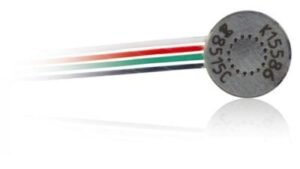
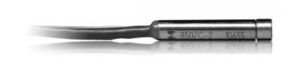
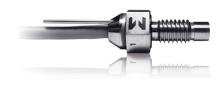
Typical wind-tunnel picks:
Piezoelectric
Dynamic-only (no DC): excellent high sensitivity and fast rise time for unsteady pressure and rapid phenomena; ICP® (IEPE) or charge output, with variants for high/low temperature and immersion. Ideal for buffeting, blast-like transients, measurements through shock waves or very small pressure ripples in aero-acoustic rigs.
Representative families for education/research:
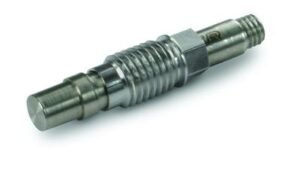
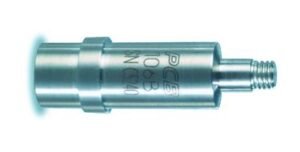
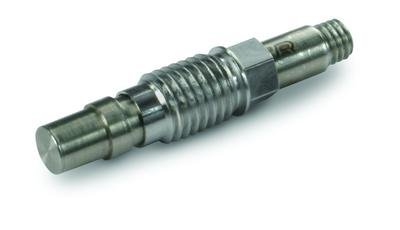
113B (high-sensitivity dynamic pressure), 106B / 112A (applications in vibro-/thermo-acoustics).
Rules of thumb
• Need Cp and mean loads plus unsteady detail? Start with piezoresistive sensors.
• Need only dynamics at high bandwidth or in harsh transients? Use piezoelectric sensors.
Integration tips
Mounting & intrusiveness
Prefer flush-mount PR at key tap locations to eliminate tube dynamics. Where drilling is not possible (heritage models, rapid student iterations), miniature PR bonded to the surface minimises intrusiveness.
Tubing and scanners
If you use pressure taps + long tubing to a scanner, be aware of tube resonance and phase lag and strong non-linear attenuation for unsteady work; mitigation and deconvolution approaches exist to extend scanners into the unsteady domain.
Bandwidth budgeting
Work back from the flow feature (e.g., Kármán shedding, gust interaction) to required bandwidth; ensure the transducer + conditioning + DAQ chain meets it.
Calibration & references
Tie Cp to the tunnel’s Pitot-static system or a well-positioned static reference; keep dynamic pressure (p∞) constant while acquiring maps.
Temperature & environment
Confirm operating range; protective gels/grids can help MEMS in dusty flows or with strong light sources ; very low sensitivity to vibrations. sensors are compatible with PIV measurements.
Quick selector (common use-cases)
- Surface Cp mapping of models (subsonic) — Endevco 8507C/8510B flush PR for mean + unsteady; add a scanner for dense tap fields; consider 8515C where drilling must be avoided.
- Unsteady aero & vortex shedding labs — PR for combined mean/unsteady, or PCB PE (e.g., 113B) when only dynamic content is needed at very high bandwidth/low amplitudes.
- Aero-/thermo-acoustics (ducts, panels, cabins) — High-sensitivity PE families for small pressure ripples; pair with microphones for reference.
- Student projects in low-speed tunnels — Reconfigurable test sections and pressure systems are ideal for linking balances, Cp and PIV in a single exercise.
Talk to us
Our engineers can advise on the right equipment for your labs / experiments and support you to get started.
Mike Keogh
Account manager, Aerospace & Defence
☏: +44 1438 908908
📱: +44 7715667483
Edward Hall
Account manager, Auto & Test and Measurement
☏: +44 1438 582740
📱: +44 7719520531
Ian Evans
Account manager, Industry & Universities
☏: +44 1438 582729
📱: +44 7394562667
👉 Download our white paper “How to choose the ideal pressure sensor for your application” for more.